A Simple Daily Practice That Actually Fits Real Life
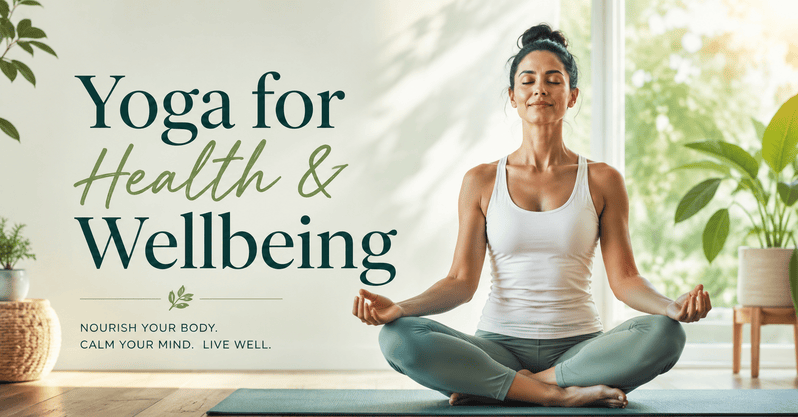
Most people think they need a perfect morning, a quiet room, expensive yoga clothes, and at least one hour of free time to start yoga. The truth is far kinder. A simple daily yoga routine can begin with five minutes, one mat, and a body that is willing to move gently.
Yoga for health is not about twisting yourself into social media shapes. It is about creating a small space in your day where your breath, body, and mind finally sit at the same table. In a world where stress follows us from phone screens to work calls to late-night scrolling, yoga for wellbeing can become a quiet reset button.
Why Yoga Supports Everyday Health
One of the biggest yoga benefits is that it meets you where you are. Tired? Try slow stretches. Stressed? Focus on breathing. Stiff from sitting too long? Move through gentle poses that open the hips, shoulders, and back. You do not need to be flexible before starting yoga. That is like saying you need to be clean before taking a bath. Slightly dramatic, but you get the point.
Many people now search for yoga for stress relief and relaxation because modern life keeps the nervous system constantly switched on. Even a short practice with deep breathing, child’s pose, cat-cow stretches, and seated forward bends can help the body slow down. The goal is not to escape life. The goal is to return to life with a calmer mind and a steadier body.
Yoga for Beginners at Home
If you are new, yoga for beginners at home is one of the easiest ways to build consistency. You can begin with a simple sequence: sit quietly for one minute, stretch the neck and shoulders, move into cat-cow pose, rest in child’s pose, then lie down in shavasana. That is enough for day one. No performance. No pressure. No audience except maybe your ceiling fan.
A morning yoga routine for energy can also help you start the day with more clarity. Try gentle sun salutations, standing side stretches, and deep belly breathing. Keep it light, especially if your body feels stiff in the morning. Over time, this small habit can support flexibility, posture, balance, and better body awareness.
Yoga for Better Sleep and Mental Health
Evening yoga has its own magic. Many people look for yoga for better sleep and mental health because their body is tired but their mind refuses to shut down. Slow breathing, legs-up-the-wall pose, gentle spinal twists, and a few minutes of stillness can signal to the body that the day is ending.
The best part is that simple yoga poses for daily health do not demand perfection. They ask for attention. When you practice regularly, you begin noticing how you sit, how you breathe, how stress sits in your shoulders, and how often your mind runs faster than your life needs it to.
Start Small, Stay Consistent
Yoga is not a quick fix. It is a relationship with your own body. Start with five to ten minutes a day. Choose comfort over force. Breathe slowly. Move gently. Rest when needed. If you have an injury, chronic condition, or medical concern, speak with a qualified professional before starting.
In the end, stress relief yoga is not only about touching your toes. It is about touching a calmer version of yourself, one breath at a time.