Why Whole Plant Foods Support Healthy Blood Pressure
Maintaining healthy blood pressure is essential for long-term heart health and overall well-being. While regular physical activity, quality sleep, and stress management all play important roles, nutrition remains one of the most powerful lifestyle factors. A whole plant foods diet is naturally rich in nutrients that help support healthy blood pressure, improve circulation, and reduce the risk of cardiovascular disease. By choosing minimally processed plant-based foods, you provide your body with the vitamins, minerals, fiber, and antioxidants it needs to function optimally.
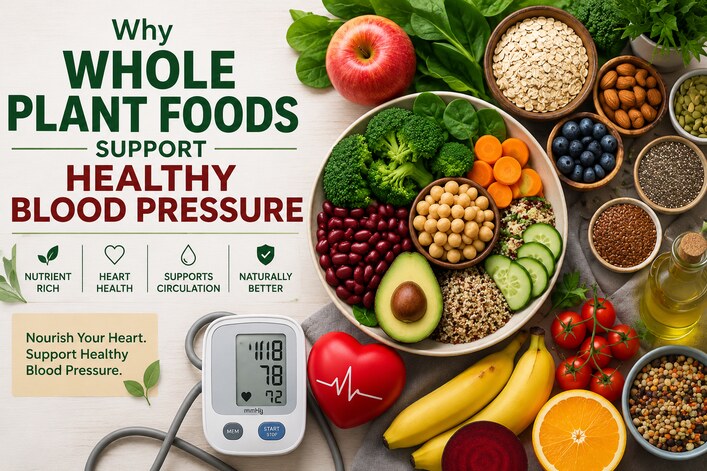
Whole plant foods include fruits, vegetables, whole grains, legumes, beans, lentils, nuts, seeds, and herbs. Unlike highly processed foods, they retain their natural nutrients without excessive sodium, unhealthy fats, or added sugars that may negatively affect heart health. A Whole-Food, Plant-Based Diet Helps Reduce Inflammation.
How Whole Plant Foods Help Support Healthy Blood Pressure
1. Rich in Potassium
Many fruits and vegetables, such as bananas, oranges, spinach, sweet potatoes, tomatoes, and avocados, are excellent sources of potassium. Potassium helps balance sodium levels in the body and supports normal blood vessel function, contributing to healthy blood pressure.
2. High in Dietary Fiber
Whole grains, oats, beans, lentils, chickpeas, fruits, and vegetables provide soluble and insoluble fiber. A high-fiber diet supports healthy cholesterol levels, improves digestion, promotes a healthy weight, and contributes to cardiovascular wellness.
3. Naturally Low in Saturated Fat
Whole plant foods contain very little saturated fat compared with many processed foods and fatty animal products. Replacing foods high in saturated fat with nutrient-rich plant foods can support healthy blood vessels and overall heart function.
4. Packed with Antioxidants
Colorful berries, leafy greens, beetroot, carrots, peppers, and other vegetables contain antioxidants and phytochemicals that help protect blood vessels from oxidative stress and inflammation, supporting better circulation.
5. Supports a Healthy Weight
Whole plant foods are naturally filling because they are rich in fiber and water while being lower in calorie density. Maintaining a healthy weight is an important factor in supporting healthy blood pressure.
Best Whole Plant Foods for Heart Health
- Leafy greens such as spinach, kale, and lettuce
- Fresh fruits including berries, apples, bananas, oranges, and pomegranates
- Beans, lentils, chickpeas, and peas
- Whole grains like oats, brown rice, quinoa, and millet
- Nuts and seeds including flaxseeds, chia seeds, walnuts, and almonds
- Beetroot, tomatoes, cucumbers, carrots, and broccoli
- Herbs and spices instead of excess salt
Foods to Limit
To better support healthy blood pressure, reduce intake of highly processed foods, packaged snacks, sugary beverages, processed meats, refined grains, and foods high in sodium. Choosing fresh, minimally processed whole foods helps your body receive more beneficial nutrients while reducing unnecessary additives.
Simple Tips to Get Started
- Fill half your plate with colorful vegetables.
- Choose whole fruits instead of fruit juices.
- Replace refined grains with whole grains.
- Add beans or lentils to soups, salads, and curries.
- Snack on fresh fruit, nuts, or seeds.
- Use herbs and spices for flavor instead of excess salt.
- Stay hydrated and combine healthy eating with regular physical activity.
Conclusion
Choosing a diet centered around whole plant foods is a simple and sustainable way to support healthy blood pressure and overall cardiovascular wellness. Nutrient-rich fruits, vegetables, legumes, whole grains, nuts, and seeds provide potassium, fiber, antioxidants, and essential vitamins that help nourish your heart naturally. Combined with regular exercise, stress management, quality sleep, and routine health check-ups, a whole-food, plant-based lifestyle can become an important part of maintaining lifelong heart health.