When people think about protein, foods like chicken, eggs, and dairy often come to mind. However, plant protein is gaining recognition as a powerful, nutritious, and sustainable alternative. Whether your goal is to build muscle, maintain a healthy weight, support heart health, or simply eat more wholesome foods, plant-based protein offers impressive benefits that many people overlook.
A whole food plant-based diet includes protein from legumes, lentils, beans, tofu, tempeh, quinoa, nuts, seeds, and whole grains. These foods provide not only protein but also fiber, vitamins, minerals, antioxidants, and healthy fats that contribute to overall wellness.
What Makes Plant Protein Different?
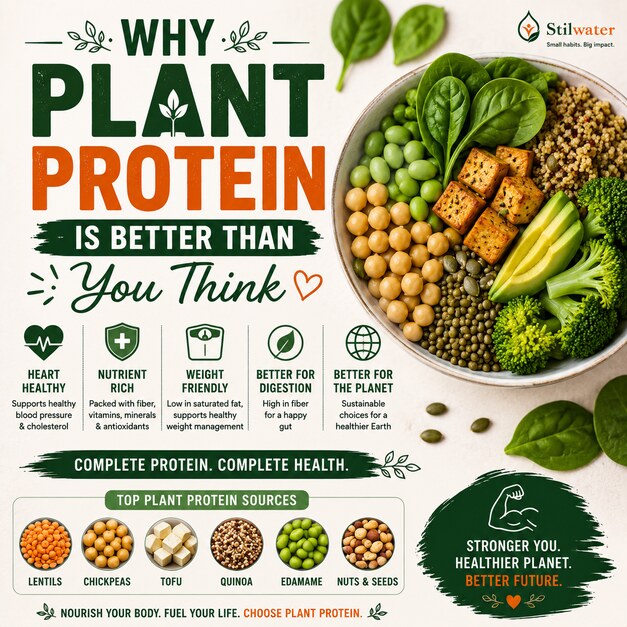
Unlike many animal-based protein sources, plant protein comes packaged with nutrients that support long-term health. It is naturally free of cholesterol, generally lower in saturated fat, and rich in dietary fiber—something animal foods do not provide. Fiber helps improve digestion, supports a healthy gut microbiome, promotes fullness, and contributes to stable blood sugar levels.
Many people believe that plant proteins are incomplete. While some individual plant foods contain lower amounts of certain essential amino acids, eating a variety of plant foods throughout the day easily provides all the amino acids your body needs. Foods like soy, quinoa, buckwheat, hemp seeds, and chia seeds are considered complete plant protein sources.
Top Plant Protein Sources
- Lentils: Rich in protein, fiber, iron, and folate.
- Beans: Black beans, kidney beans, chickpeas, and navy beans provide high-quality protein.
- Tofu and Tempeh: Excellent soy-based proteins suitable for a variety of meals.
- Quinoa: A complete protein that also provides magnesium and fiber.
- Nuts and Seeds: Almonds, walnuts, peanuts, pumpkin seeds, flaxseeds, hemp seeds, and chia seeds.
- Whole Grains: Oats, barley, brown rice, and millet contribute additional protein.
Supports Heart Health and Weight Management
Replacing some animal proteins with plant-based protein may help lower saturated fat intake while increasing fiber consumption. This combination supports healthy cholesterol levels, improves cardiovascular health, and promotes better weight management.
Protein also helps you feel satisfied after meals, reducing unnecessary snacking. Combined with fiber-rich plant foods, it can support healthy eating habits and make maintaining a healthy weight easier.
Plant Protein and Muscle Building
A common myth is that plant protein cannot support muscle growth. In reality, research shows that consuming adequate protein from a variety of plant sources, combined with regular strength training, can effectively support muscle maintenance and development. Athletes and fitness enthusiasts around the world successfully build muscle using high-protein vegan foods.
Better for You and the Planet
Choosing more plant-powered nutrition benefits not only your health but also the environment. Producing plant foods generally requires fewer natural resources and results in lower greenhouse gas emissions compared to many animal-based protein sources. Making even a few plant-based meals each week can contribute to a more sustainable future.
Simple Ways to Add More Plant Protein
- Add beans or lentils to soups and salads.
- Replace meat with tofu or tempeh in stir-fries.
- Snack on roasted chickpeas, nuts, or seeds.
- Enjoy oatmeal topped with chia seeds and almonds.
- Include quinoa as a nutritious side dish.
- Blend unsweetened soy milk into smoothies for extra protein.
Final Thoughts
Plant protein is far more than a substitute for animal protein—it is a nutrient-rich foundation for a healthier lifestyle. By including a variety of legumes, whole grains, nuts, seeds, fruits, and vegetables in your daily meals, you can meet your protein needs while supporting heart health, digestive wellness, muscle maintenance, and long-term well-being.
Whether you’re fully embracing plant-based living or simply looking to eat healthier, adding more plant-based protein to your diet is a smart, sustainable choice that benefits both your body and the planet.
Frequently Asked Questions (FAQs)
Can you get enough protein from plants?
Yes. A balanced diet that includes legumes, soy foods, whole grains, nuts, and seeds can provide all the protein most healthy adults need.
What is the best plant protein?
Excellent choices include lentils, chickpeas, tofu, tempeh, quinoa, edamame, hemp seeds, chia seeds, and black beans.
Is plant protein good for muscle building?
Yes. When consumed in adequate amounts alongside resistance training, plant protein supports muscle growth and recovery just as effectively as many animal protein sources.