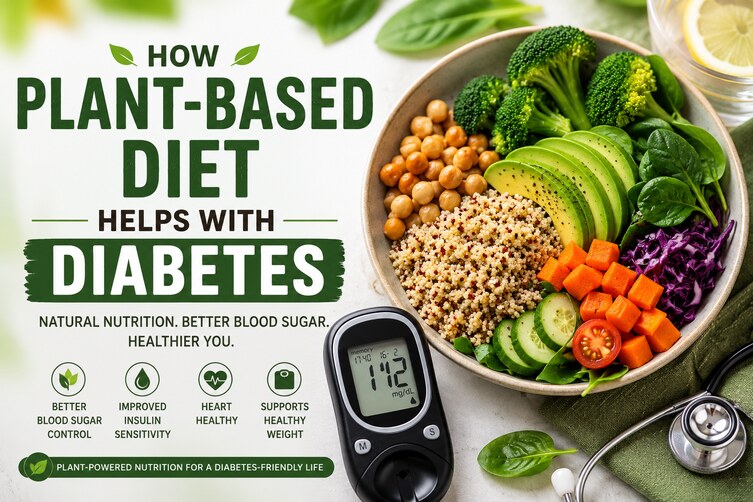
Managing type 2 diabetes begins with making healthier food choices, and one of the most effective approaches is adopting a whole food plant-based diet. Rich in vegetables, fruits, whole grains, legumes, nuts, and seeds, plant-based living provides essential nutrients that help regulate blood sugar, improve insulin sensitivity, and support long-term health.
Unlike highly processed diets, a plant-based diet for diabetes is naturally high in fiber, antioxidants, vitamins, and minerals while being lower in saturated fats. These nutrients work together to promote healthy blood glucose levels and reduce the risk of diabetes-related complications.
How Plant-Based Foods Help Manage Diabetes
Fiber-rich plant foods slow down the absorption of sugar into the bloodstream, helping prevent sudden spikes in blood glucose. Whole fruits, vegetables, legumes, and whole grains also improve digestion, promote fullness, and help maintain a healthy body weight—all important factors for diabetes management.
Research suggests that diets high in saturated fats and heavily processed foods may contribute to insulin resistance, one of the leading causes of type 2 diabetes. Replacing these foods with nutrient-dense plant foods can help the body respond better to insulin and support healthier blood sugar control.
Foods to Eat on a Plant-Based Diet for Diabetes
- Leafy Greens: Spinach, kale, fenugreek leaves, lettuce.
- Fresh Fruits: Apples, berries, oranges, guava, pears, kiwi, pomegranate, papaya, and citrus fruits in moderation. Whole fruits are preferred over fruit juices because they contain more fiber.
- Whole Grains: Oats, quinoa, brown rice, barley, millets.
- Legumes: Lentils, chickpeas, black beans, kidney beans.
- Nuts & Seeds: Almonds, walnuts, chia seeds, flaxseeds, pumpkin seeds.
- Healthy Plant Proteins: Tofu, tempeh, edamame.
- Low-Glycemic Vegetables: Broccoli, cauliflower, cucumber, zucchini, bell peppers.
Foods to Limit or Avoid
Reducing foods that promote inflammation and insulin resistance can help improve blood sugar control.
- High-fat dairy products such as whole milk, cheese, butter, cream, and ice cream.
- Processed meat and red meat.
- Deep-fried foods and fast foods.
- Foods high in saturated and trans fats.
- Sugary beverages, sweets, pastries, and refined carbohydrates.
- Highly processed packaged snacks.
Some people may also benefit from limiting rich, high-fat dairy products because they are significant sources of saturated fat. Choosing unsweetened plant-based alternatives such as soy or oat milk can be a healthier option.
Can Plant-Based Living Improve Diabetes?
A healthy plant-based lifestyle supports weight management, lowers cholesterol, improves heart health, and enhances insulin sensitivity. Since people with diabetes have a higher risk of cardiovascular disease, eating more vegetables, fruits, legumes, and whole grains can provide protection beyond blood sugar control.
Although a plant-based diet is not a cure for diabetes, many people experience better blood glucose management, reduced medication requirements (under medical supervision), and improved overall well-being after adopting this way of eating.
Final Thoughts
Choosing a plant-based diet for diabetes is one of the most effective lifestyle changes for supporting long-term health. By eating more fruits, vegetables, legumes, whole grains, nuts, and seeds while limiting saturated-fat-rich foods, processed foods, and sugary snacks, you can improve blood sugar control naturally.
Combined with regular physical activity, quality sleep, stress management, and routine medical care, plant-based living offers a sustainable path toward healthier living and better diabetes management.
Frequently Asked Questions
Can fruits be eaten by people with diabetes?
Yes. Whole fruits such as apples, berries, guava, pears, oranges, kiwi, and papaya are excellent sources of fiber, vitamins, and antioxidants. Eating whole fruits instead of fruit juices helps maintain healthier blood sugar levels.
Is dairy bad for diabetes?
High-fat dairy products contain saturated fat, which may contribute to insulin resistance when consumed in excess. Choosing lower-fat options or unsweetened plant-based alternatives may be beneficial for many individuals.
Can a plant-based diet reverse diabetes?
Some people with type 2 diabetes may achieve remission through sustained weight loss and lifestyle changes under medical supervision. A whole food plant-based diet can be an important part of that strategy, but it is not a guaranteed cure.