
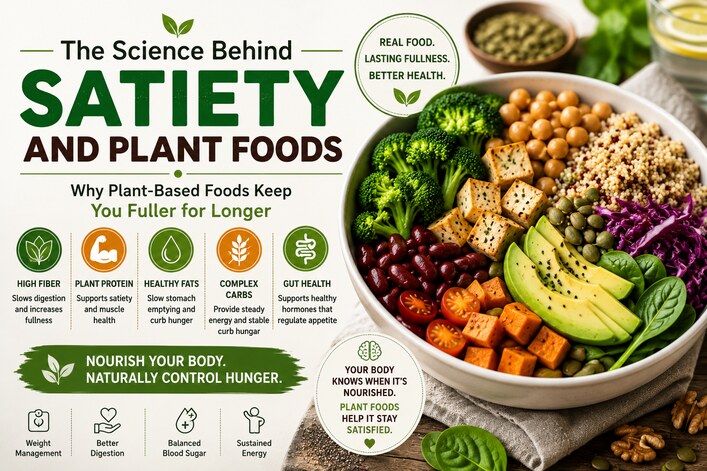
Have you ever wondered why some meals leave you feeling hungry within an hour while others keep you comfortably satisfied for much longer? The answer lies in satiety – the feeling of fullness and satisfaction after eating. Understanding the science behind satiety can help you make healthier food choices, naturally manage your weight, reduce cravings, and support long-term wellness.
One of the most effective ways to promote satiety is by eating more whole plant foods. A whole food plant-based diet emphasizes fruits, vegetables, legumes, whole grains, nuts, and seeds. These foods are naturally rich in dietary fiber, vitamins, minerals, antioxidants, water, healthy fats, and protein. Their high nutrient density and low calorie density help nourish the body while keeping you feeling satisfied.
What Is Satiety?
Satiety is your body’s natural signal that you’ve eaten enough. It is regulated by a combination of stomach fullness, nutrient intake, appetite-regulating hormones, blood sugar balance, and communication between the digestive system and the brain.
When your meals provide the right balance of nutrients, your body stays satisfied for longer, making it easier to avoid unnecessary snacking and overeating.
Why Whole Plant Foods Are So Satisfying
One of the greatest strengths of whole plant foods is their high nutrient density. Unlike highly processed foods that are often high in calories but low in nutrients, whole plant foods provide a wide range of essential vitamins, minerals, antioxidants, and phytochemicals that nourish the body efficiently.
Many whole plant foods also contain large amounts of water and dietary fiber, allowing you to eat satisfying portions without consuming excessive calories. This combination helps you feel physically and nutritionally satisfied after meals.
The Power of Dietary Fiber
Dietary fiber is one of the key reasons whole plant foods support healthy appetite control.
Fiber absorbs water and adds bulk to food, increasing its volume in the stomach. This gently stretches the stomach walls, sending signals to the brain that you’ve eaten enough.
Instead of slowing digestion itself, fiber helps regulate the absorption of carbohydrates, allowing glucose to enter the bloodstream more gradually. This supports balanced blood sugar levels and reduces the rapid spikes and crashes that often trigger hunger and cravings.
Because fiber is found only in plant foods, increasing your intake of fruits, vegetables, legumes, and whole grains is one of the simplest ways to improve satiety naturally.
The Role of Protein
Protein also contributes to feelings of fullness. Excellent plant-based protein sources include lentils, beans, chickpeas, tofu, tempeh, edamame, quinoa, nuts, and seeds.
Combining protein-rich foods with fiber-rich whole plant foods creates balanced meals that provide sustained energy, support muscle maintenance, and help control appetite throughout the day.
Complex Carbohydrates for Lasting Energy
Whole grains such as oats, brown rice, quinoa, barley, and millet provide complex carbohydrates along with fiber, vitamins, minerals, and antioxidants.
Because these foods remain in their natural, minimally processed form, the fiber they contain helps regulate carbohydrate absorption, promoting steady energy levels and reducing the sudden hunger that often follows refined carbohydrates such as white bread, pastries, and sugary snacks.
Healthy Plant Fats Support Satiety
Healthy unsaturated fats also play an important role in keeping you satisfied.
Foods such as avocados, almonds, walnuts, pistachios, chia seeds, flaxseeds, hemp seeds, and pumpkin seeds provide healthy fats along with fiber, protein, vitamins, and minerals.
These nutrient-rich foods help create balanced meals that are both satisfying and beneficial for heart and brain health.
Gut Health and Appetite Regulation
A whole food plant-based diet supports a diverse and healthy gut microbiome.
Beneficial gut bacteria feed on dietary fiber and produce compounds called short-chain fatty acids (SCFAs). Research suggests these compounds may help support the hormones involved in appetite regulation while promoting digestive health.
A healthy gut microbiome is associated with improved digestion, better metabolic health, stronger immunity, and healthier eating habits.
Best Whole Plant Foods for Satiety
If your goal is to stay full for longer, include plenty of these foods in your meals:
- Lentils, beans, chickpeas, and peas
- Whole grains such as oats, quinoa, barley, millet, and brown rice
- Green leafy vegetables including spinach, kale, and amaranth leaves
- Broccoli, cauliflower, carrots, sweet potatoes, and pumpkin
- Fruits such as apples, pears, oranges, berries, and guava
- Tofu, tempeh, and edamame
- Almonds, walnuts, pistachios, chia seeds, flaxseeds, hemp seeds, and pumpkin seeds
- Avocados
Simple Ways to Feel Fuller Naturally
- Fill at least half of your plate with colorful vegetables.
- Include legumes such as beans, lentils, or chickpeas every day.
- Replace refined grains with whole grains whenever possible.
- Add nuts and seeds to salads, smoothies, oatmeal, or yogurt alternatives.
- Eat slowly and chew your food thoroughly.
- Drink enough water throughout the day.
- Choose whole fruits instead of fruit juices.
- Build balanced meals that include fiber, protein, and healthy fats.
Final Thoughts
The science behind satiety shows that whole plant foods naturally support appetite control through their high nutrient density, dietary fiber, protein, healthy fats, water content, and natural food volume. Rather than depending on restrictive diets or processed “diet foods,” eating a variety of nutrient-rich whole plant foods helps your body feel both nourished and satisfied.
A whole food plant-based lifestyle can support healthy weight management, improve digestive health, promote balanced blood sugar levels, nourish the gut microbiome, and provide steady energy throughout the day. By making whole plant foods the foundation of your meals, you can enjoy delicious, satisfying foods while supporting your long-term health.
Frequently Asked Questions (FAQs)
1. What foods increase satiety the most?
Foods rich in dietary fiber, protein, healthy fats, and water—including beans, lentils, oats, fruits, vegetables, whole grains, nuts, and seeds—are among the most satisfying foods.
2. Can a whole food plant-based diet help with weight management?
Yes. Whole plant foods are naturally nutrient-dense and generally lower in calorie density than highly processed foods. Their combination of fiber, water, and protein helps promote fullness and may support healthy, sustainable weight management when combined with an overall balanced lifestyle.
3. Why does dietary fiber help control hunger?
Dietary fiber increases the volume of food in the stomach, supports healthy carbohydrate absorption, helps maintain balanced blood sugar levels, and contributes to healthy appetite regulation, allowing you to stay satisfied for longer.
4. Do whole plant foods provide enough protein?
Yes. A varied whole food plant-based diet that includes legumes, soy foods, whole grains, nuts, and seeds can provide adequate protein for most healthy adults while also supplying fiber and many other essential nutrients.
5. What is the easiest way to start eating more filling plant foods?
Begin by replacing refined foods with whole foods. Add beans or lentils to one meal each day, choose whole grains instead of refined grains, include plenty of vegetables, eat whole fruits as snacks, and add a handful of nuts or seeds to your meals for extra nutrition and satiety.