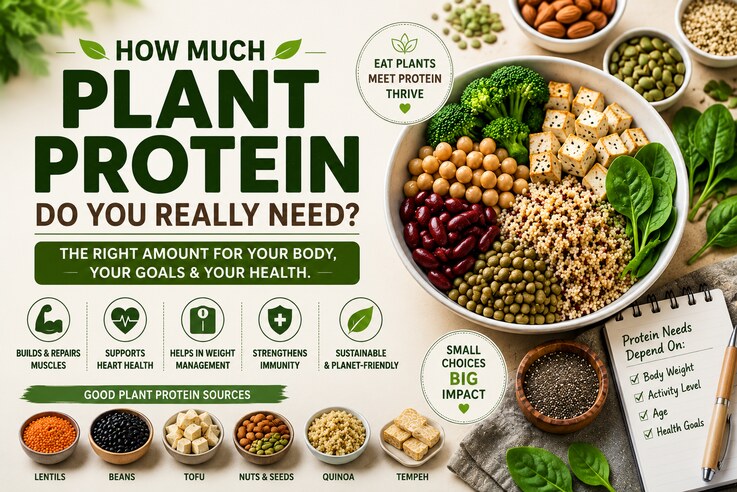
How Much Plant Protein Do You Really Need?
Protein is one of the essential building blocks of the human body. It helps build muscles, repair tissues, produce enzymes and hormones, support immunity, and keep you feeling satisfied after meals. If you follow a plant-based diet, you may wonder whether you’re getting enough plant protein. Fortunately, a well-planned whole-food, plant-based diet can easily provide all the protein your body needs.
Plant protein isn’t found in just one food—it comes from a wide variety of legumes, beans, lentils, soy foods, nuts, seeds, whole grains, fruits, and even green leafy vegetables. Together, these foods provide the amino acids your body needs to build and maintain healthy proteins.
How Much Protein Do You Really Need?
For most healthy adults, the recommended daily protein intake is approximately 0.8 grams per kilogram of body weight. However, individual needs depend on age, physical activity, and health goals.
- Adults with a sedentary lifestyle: Around 0.8 g/kg of body weight.
- Physically active adults: Around 1.0–1.2 g/kg.
- People building muscle: Around 1.2–2.0 g/kg.
- Older adults: Often benefit from 1.0–1.2 g/kg to support healthy muscle maintenance.
Rather than consuming a large amount of protein in one meal, it is beneficial to include protein-rich plant foods throughout the day.
The Role of Green Leafy Vegetables
Many people don’t realize that green leafy vegetables also contribute to your body’s protein needs. Vegetables such as spinach, kale, moringa leaves, fenugreek leaves, amaranth leaves, and broccoli contain essential amino acids, which are the building blocks your body uses to create proteins.
Although leafy greens are not as protein-rich as beans or lentils, they provide valuable nutrients including iron, calcium, folate, antioxidants, vitamins A, C, and K, along with amino acids that complement other plant protein sources. Eating a variety of plant foods throughout the day helps your body obtain all the essential amino acids it needs.
Best Plant Protein Sources
- Lentils: Excellent source of protein, fiber, and iron.
- Beans: Kidney beans, black beans, chickpeas, and navy beans.
- Tofu & Tempeh: Complete soy proteins rich in essential amino acids.
- Quinoa: A complete protein with all nine essential amino acids.
- Nuts & Seeds: Almonds, walnuts, chia seeds, flaxseeds, hemp seeds, pumpkin seeds.
- Whole Grains: Oats, barley, millet, and brown rice.
- Green Leafy Vegetables: Spinach, kale, moringa, broccoli, fenugreek leaves, mustard greens, and amaranth leaves.
- Fruits: Guava, jackfruit, blackberries, mulberries, avocados, and bananas contribute small amounts of protein while supplying vitamins, minerals, and fiber.
Why Variety Is More Important Than Quantity
Your body doesn’t require every essential amino acid in a single meal. By eating a wide variety of whole plant foods across the day—including legumes, grains, leafy vegetables, nuts, seeds, and fruits—you naturally obtain a balanced amino acid profile that supports muscle repair, metabolism, immunity, and overall health.
Health Benefits Beyond Protein
Unlike many animal-based protein sources, plant protein comes packaged with dietary fiber, antioxidants, vitamins, and healthy unsaturated fats. These nutrients support healthy digestion, better blood sugar control, heart health, healthy cholesterol levels, and weight management. This makes plant-powered nutrition an excellent long-term dietary choice.
Easy Ways to Meet Your Daily Protein Goal
- Include beans or lentils in at least one meal every day.
- Add spinach, kale, or moringa leaves to soups, smoothies, curries, or stir-fries.
- Choose tofu or tempeh as a protein-rich main dish.
- Snack on roasted chickpeas, almonds, or pumpkin seeds.
- Replace refined grains with quinoa, oats, or millet.
- Eat a variety of colorful fruits and vegetables every day.
Final Thoughts
You don’t need expensive supplements or excessive amounts of protein to stay healthy. A balanced whole food plant-based diet naturally provides the amino acids and nutrients your body needs. By combining legumes, soy foods, whole grains, nuts, seeds, fruits, and green leafy vegetables, you can comfortably meet your daily protein requirements while supporting muscle health, heart health, digestion, and overall wellness.
The key isn’t eating one “superfood”—it’s enjoying a wide variety of nutrient-rich plant foods every day. Together, they provide everything your body needs to build healthy proteins and thrive.
Frequently Asked Questions
Do green leafy vegetables contain protein?
Yes. Green leafy vegetables contain small amounts of protein and essential amino acids that help your body build proteins. While they are not the richest protein source, they make an important contribution as part of a varied plant-based diet.
Can I meet my protein needs without meat?
Yes. Eating a variety of legumes, beans, lentils, soy foods, whole grains, nuts, seeds, fruits, and leafy greens provides enough protein for most healthy adults.
Do I need protein supplements?
Most people eating a balanced whole food plant-based diet can meet their daily protein needs through food alone. Supplements are usually only necessary in specific medical or athletic situations under professional guidance.